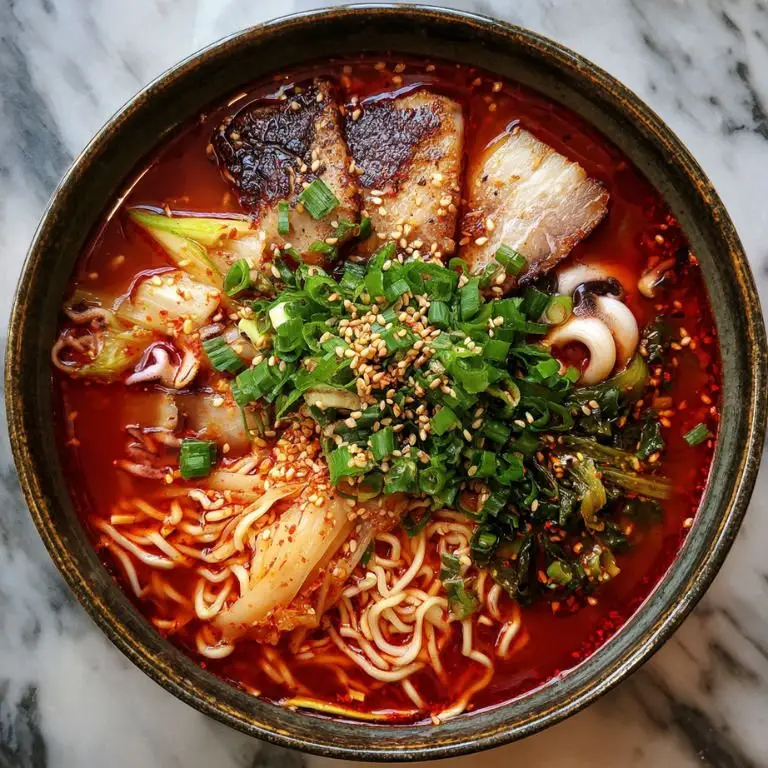
If there’s one dish that captures the heart of a bustling Korean kitchen, it’s jjamppong—a bold and fiery korean spicy seafood noodle soup that balances oceanic depth, rich umami, and the crackle of chili heat in every slurp. This version of Pork and Squid Jjamppong with Napa Cabbage is especially satisfying, with tender strips of pork belly and perfectly cooked squid swimming in a complex broth with fresh ramen noodles. The napa cabbage adds just the right crunch and sweetness to the spicy soup base, making it the perfect bowl for fans of comforting yet vibrant korean meals. Whether you're new to traditional Korean food or a longtime lover of korean noodle soup recipes, this one delivers on flavor and satisfaction.
Fiery Pork and Squid Jjamppong with Napa Cabbage
Prep Time 25 minutes mins
Cook Time 35 minutes mins
Total Time 1 hour hr
Course Main Course
Cuisine Chinese, Korean
Large pot Essential for boiling the stock and cooking the final soup. A Dutch oven or deep soup pot works best.
Wok or large skillet Used to stir-fry the proteins and vegetables before adding them to the broth. A wok is ideal for its high heat and quick cook times.
Fine mesh strainer (optional) Helpful if you want to strain the broth for a smoother texture.
Tongs and ladle For handling noodles and serving the soup.
Medium saucepan To cook the noodles separately.
Alternatives If you don’t have a wok, a wide nonstick skillet will do. And in place of fresh noodles, dried udon or even linguine can stand in for a homemade twist on korean noodle soup recipes.
For the Broth
- 6 cups chicken stock unsalted
- 1 cup clam juice or seafood stock
- 3 dried shiitake mushrooms soaked and sliced
- 4 cloves garlic minced
- 1- inch piece of ginger minced
- 1 medium yellow onion sliced
- 2 tablespoons gochugaru Korean red pepper flakes
- 1 tablespoon gochujang Korean chili paste
- 2 tablespoons soy sauce
- 1 tablespoon fish sauce
- 1 tablespoon sesame oil
- 1 teaspoon sugar
- Salt to taste
For the Toppings
- 1/2 pound pork belly thinly sliced
- 1/2 pound cleaned squid bodies sliced into rings and tentacles halved
- 1/2 cup peeled shrimp optional, for extra seafood punch
- 2 cups Napa cabbage chopped
- 1 medium carrot julienned
- 1 zucchini julienned
- 1/2 onion thinly sliced
- 4 scallions cut into 2-inch pieces
- 1/4 cup wood ear mushrooms rehydrated if using dried
- 1 tablespoon vegetable oil
For the Noodles
- 1 pound fresh ramen noodles or thick wheat noodles used in korean noodle soup
Garnish
- Toasted sesame seeds
- Extra scallions finely chopped
- Drizzle of chili oil optional
Step 1: Prepare the Broth Base
In a large pot, combine the chicken stock, clam juice, soy sauce, fish sauce, and sugar. Add the sliced onion, soaked and sliced shiitake mushrooms, minced garlic, and ginger. Bring it all to a boil over medium-high heat. Once boiling, reduce heat to medium-low and simmer for 15 minutes. This forms the flavor backbone of your seafood noodle soup.
Step 2: Stir-Fry the Protein and Vegetables
In a wok or large skillet, heat the vegetable oil over high heat. Add the pork belly and stir-fry until browned and slightly crispy at the edges. Toss in the squid and shrimp, cooking for just 1-2 minutes until the squid curls and the shrimp turn pink. Remove and set aside.
Add a little more oil if needed, then stir-fry the napa cabbage, carrots, zucchini, and onions for about 3 minutes. Sprinkle in the gochugaru and gochujang, stirring vigorously to coat the vegetables in the spicy mixture. Add the scallions and wood ear mushrooms, then return the cooked seafood and pork to the wok. Stir well to combine.
Step 3: Combine and Simmer
Transfer the stir-fried mixture into the broth pot. Let everything simmer together for about 10 minutes, allowing the flavors to meld. Adjust salt to taste.
Step 4: Cook the Noodles
While the soup simmers, cook your fresh ramen noodles in a separate pot according to package instructions (typically 3–4 minutes for fresh noodles). Drain and rinse under warm water to prevent sticking.
Step 5: Assemble and Serve
Divide the cooked noodles into large bowls. Ladle the jjamppong broth and generous portions of pork, squid, and veggies over the noodles. Top with toasted sesame seeds, chopped scallions, and a drizzle of chili oil for extra heat, if desired.
Perfect Pairings
This jjamppong recipe is a standalone masterpiece, but pairing it with the right sides and beverages can elevate your easy dinner recipes game.
- Banchan (Korean side dishes): Classic kimchi, pickled radish, or spicy cucumber salad help cut through the richness and complement the heat.
- Scallion pancakes: A savory, crispy appetizer that mirrors the umami of the broth—perfect for fans of appetizer recipes.
- Cold barley tea (boricha): A traditional Korean drink that cools your palate and refreshes after each spicy slurp.
- Korean fried chicken: If you’re going all out with a korean meals spread, a side of crunchy yangnyeom chicken is a heavenly indulgence.
FAQs
1. What type of pork should I use?
Pork belly is the preferred cut for jjamppong because of its richness and flavor. However, thinly sliced pork shoulder or even lean pork loin can be used if you want a lighter broth.
2. Can I use other seafood besides squid?
Absolutely. Mussels, clams, or scallops are excellent additions. Just be careful not to overcook them—most seafood only needs a few minutes in the hot broth.
3. What kind of noodles work best?
Fresh ramen noodles are ideal for this dish due to their chewy texture and ability to soak up the spicy broth. However, you can use udon, somyeon, or even spaghetti if you're improvising a korean noodle soup at home.
4. Is there a vegetarian version of jjamppong?
Yes, you can swap out the pork and squid for tofu and additional mushrooms (like king oyster and enoki), and use vegetable broth instead. This results in a delicious korean noodle soup with deep umami minus the meat and seafood.
5. How does jjamppong differ from jjajjamyeon?
While both are iconic jjamppong korean food dishes, jjajjamyeon (also spelled jjajangmyeon) is a black bean noodle dish that's savory and slightly sweet, without any heat or seafood. Jjamppong is fiery, brothy, and packed with seafood and vegetables—a completely different experience for the palate.