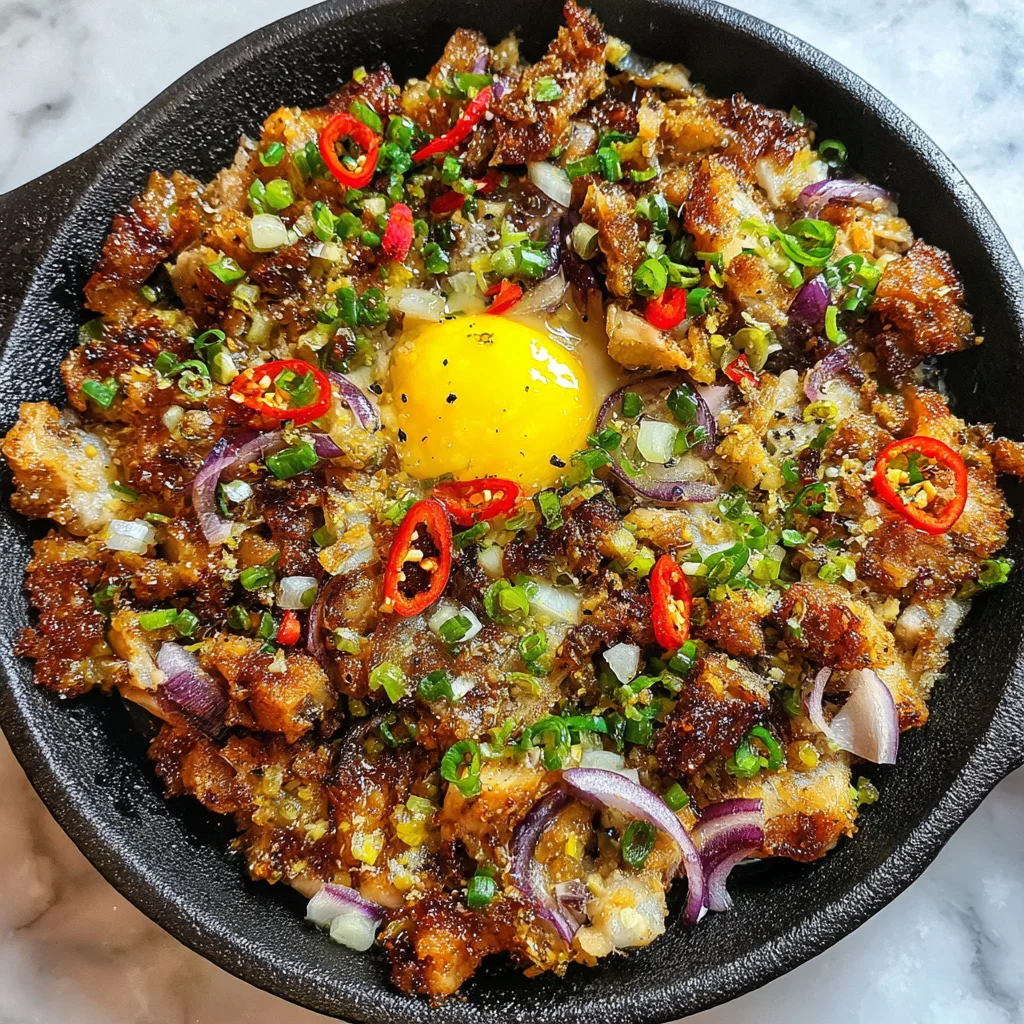
If you love the bold, tangy, crunchy chaos of sisig but want something lighter than the classic pork version, this crispy bangus sisig is your new weeknight flex. We crisp up boneless milkfish until the edges go shatter-y, then toss it with a punchy calamansi-soy dressing, plenty of red onion, and just enough mayo to make it feel indulgent without turning it into fish salad. Finish it on a screaming-hot skillet (or a regular pan if that is what you have), crack in an egg, and let everything sizzle together until the edges caramelize. It hits all the big "sizzling sisig" notes—smoke, acid, heat, crunch—while still tasting clean and seafood-forward. If you have been searching for a sisig recipe philippines that is doable at home and not fussy, this one is it.
Crispy Bangus Sisig: Sizzling Seafood Perfection!
Crispy boneless bangus tossed in a calamansi-soy dressing with onions, chiles, and mayo, served sizzling with an egg on top.
Prep Time 25 minutes mins
Cook Time 25 minutes mins
Total Time 50 minutes mins
Course Main Dish
Cuisine Filipino
large nonstick skillet or cast-iron skillet 12-inch is ideal for crisping the bangus without crowding; cast iron gives better browning, nonstick is easier if you are nervous about fish sticking
Tongs or fish spatula tongs for turning pieces, a fish spatula for lifting delicate flakes without breaking them
Mixing bowl medium size for tossing the dressing and aromatics; a stainless bowl is nice because it stays cool
Small bowl for whisking the dressing; a mug works in a pinch
Cutting board and sharp knife use a stable board for slicing onions thinly; a serrated knife helps with tomatoes if you use them
paper towel and plate for drying the fish and holding crispy pieces; drying is a big deal for an easy sisig recipe that still gets crunchy
sizzling plate (optional) a cast-iron sizzler or fajita plate makes it feel like restaurant-style sisig; you can also serve straight from the skillet
For the crispy bangus
- 1½ pound boneless bangus skin-on fillets are best for crunch; if using belly-cut, expect richer flavor
- 1 teaspoon fine sea salt start light because the dressing has soy sauce
- ½ teaspoon black pepper freshly ground if possible
- 2 tablespoon cornstarch optional but helpful for extra crisp edges; substitute with rice flour
- 2 tablespoon neutral oil canola, avocado, or grapeseed; avoid strong olive oil here
For the sisig dressing
- 3 tablespoon calamansi juice fresh is best; substitute with 2 tablespoon lime juice plus 1 tablespoon lemon juice
- 1½ tablespoon soy sauce regular or low-sodium; if using patis, start with 1 teaspoon and add to taste
- 1 tablespoon mayonnaise use a good one; substitute with greek yogurt for a lighter but tangier finish
- 1 teaspoon dijon mustard optional but it helps emulsify and adds savory depth
- 1 teaspoon brown sugar optional, just to round the acidity; substitute with honey
For the aromatics and heat
- 1 piece red onion thinly sliced; substitute with shallot for a softer bite
- 4 clove garlic minced; adjust up if you are a garlic person
- 2 piece green chile sliced (thai chile or siling haba); remove seeds for less heat
- 1 piece red chile sliced for color and sharper heat; substitute with ½ teaspoon crushed red pepper
- 2 tablespoon scallion thinly sliced; substitute with chives
For the sizzle and serving
- 1 tablespoon butter for that classic sizzling aroma; substitute with more oil if avoiding dairy
- 1 piece egg optional but highly recommended for the classic sisig vibe
- ½ cup cooked jasmine rice per serving, for a full meal; garlic rice is even better
- 1 piece calamansi cut into wedges for squeezing at the table
Prep
Pat the boneless bangus very dry with paper towel. This is not busywork: dry fish browns faster, sticks less, and gets those crispy corners that make sisig feel like sisig.
Slice the red onion thinly, mince the garlic, slice the chiles, and slice the scallion. Keep them ready near the stove because the last steps move fast.
In a small bowl, whisk calamansi juice, soy sauce, mayonnaise, dijon mustard (if using), and brown sugar (if using) until smooth. Taste it now. You want it bright and salty with a gentle creaminess; adjust with a little more calamansi for tang or a tiny splash of soy for salt.
Crisp the bangus
Season the bangus with salt and black pepper on both sides. If you want extra crunch, dust lightly with cornstarch and tap off any heavy patches (a thin veil works better than a thick coat).
Heat the skillet over medium-high heat for 2 minute, then add neutral oil. When the oil shimmers, lay the bangus in skin-side down. Press gently with a spatula for 10 second so the skin makes full contact.
Cook without moving until the skin is deep golden and releases easily, about 5 minute. Flip and cook the second side until opaque and lightly browned, about 3 minute. Transfer to a plate and rest for 2 minute.
Chop the bangus into small bite-size pieces. You can go chunky or fine depending on your mood; smaller pieces crisp more in the final sizzle.
Build the sisig (the fast, hot part)
Return the skillet to medium heat. Add butter. Once it melts and foams, add garlic and cook until fragrant, about 30 second. Do not let it scorch.
Add the sliced onion and cook, stirring, until slightly softened but still snappy, about 1 minute. Sisig wants texture, not fully caramelized onions.
Add the chopped bangus and spread it out so it touches the pan. Let it sizzle undisturbed for 1 minute to re-crisp the edges, then toss.
Pour in the dressing and add the chiles. Toss for 30 second, just until everything looks glossy and the sauce clings. If it looks wet, keep cooking and tossing for another 30 second; the goal is "coated" not "soupy."
Make it sizzling and serve
If using a sizzling plate, heat it separately until very hot (it should spit when flicked with water). Transfer the bangus sisig onto the plate carefully.
For the egg: make a small well in the center and crack in the egg. Let it cook from the heat of the plate or pan until the whites start setting, about 1 minute, then gently stir it in if you like it creamy and saucy.
Finish with scallion and serve immediately with rice and calamansi wedges. This is the kind of sisig recipe that gets sad if it sits around, so eat it while it is loud and sizzling.
Pairings
This crispy bangus version is a seafood-forward take on a sisig recipe philippines staple, so I like to pair it with sides that balance heat, salt, and richness.
Rice and silog-style upgrades
- Garlic fried rice (sinangag): the crisp garlic bits echo the crispy fish edges. If you want the full comfort-food situation, turn it into a silog plate with the egg stirred into the sisig and extra rice underneath.
- Plain steamed jasmine rice: boring in theory, perfect in practice because it lets the calamansi and chile shine.
Fresh and crunchy sides
- Cucumber and tomato salad with vinegar: keeps the meal from feeling heavy and cuts through the mayo.
- Quick pickled red onion: if you want more zing, pickle extra onion in vinegar, salt, and sugar while you cook.
Drinks
- Iced calamansi juice or lemonade: doubles down on the citrus that makes sisig feel electric.
- Light lager or pilsner: classic move with anything sizzling and savory.
Sauces at the table
- Extra calamansi wedges: non-negotiable if you like your sisig sharp.
- Chili garlic sauce: for heat lovers who want a deeper, roasted chile kick.
If you usually make a pork sisig recipe, think of this as the same "sizzle, crunch, tang" craving, just with cleaner flavor and faster cook time.
FAQs
What cut of bangus works best for this sisig recipe?
Use boneless bangus fillet, ideally skin-on. The skin is what gives you that signature crispy edge that makes this feel like real sisig instead of just seasoned fish. Belly-cut boneless bangus is richer and more forgiving (more fat, less likely to dry out), while a leaner center cut tastes cleaner but needs careful cooking.
Can I make this an easy sisig recipe if I cannot find calamansi?
Yes. Swap 2 tablespoon lime juice plus 1 tablespoon lemon juice for the 3 tablespoon calamansi juice. You will still get that bright, slightly floral citrus vibe that makes sisig taste right.
How do I keep the bangus crispy after adding the dressing?
Two moves: (1) dry the fish well and crisp it hard in the first cook, and (2) keep the final toss short. The dressing should coat, not drown. If it looks watery, keep it on the heat and toss for another 30 second so the sauce reduces and clings.
Is this the same as a classic pork sisig, and how to make pork sisig if I want the traditional version?
The flavor structure is similar (acid, onion, chile, creamy element), but classic pork sisig usually uses chopped pork face, pork shoulder, or crispy pork belly with a deeper, meatier richness and more rendered fat. If you want the traditional direction, start by crisping chopped pork shoulder (boneless) or roasted crispy pork belly, then follow the same onion-chile-calamansi finishing steps. The technique is shared; the protein changes the personality.
Can I substitute other proteins, like chicken breast or chicken thigh?
You can. For chicken sisig, boneless chicken thigh is the best swap because it stays juicy and can take aggressive browning. Chicken breast works but dries faster, so cook it gently, rest it, and toss it at the end just long enough to heat through. For a different seafood vibe, firm fish like tuna belly or even chopped shrimp can work, but keep the heat high and the cook time short so it stays tender.