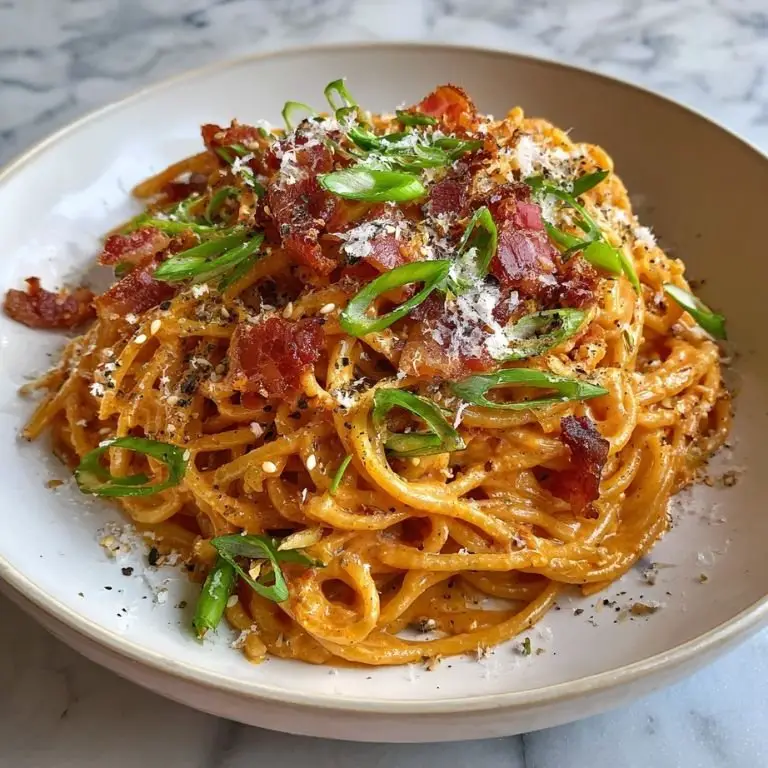
There’s nothing quite like a plate of carbonara to soothe your soul—unless you’re dialing it up with a spicy Korean kick. Enter Creamy Gochujang Carbonara with Crispy Bacon Bits, a luscious, velvety pasta dish that marries the smoky richness of traditional carbonara with the fiery, fermented depth of gochujang. This is comfort food with attitude—creamy, spicy, umami-packed, and incredibly addictive. Think of it as a bold fusion of Korean gochujang recipes and classic Roman techniques, creating a dinner that feels familiar but completely new. If you’re already a fan of dishes like kimchi carbonara, creamy udon, or jajangmyeon, you’re going to fall hard for this spicy gochujang pasta recipe.
Creamy Gochujang Carbonara with Crispy Bacon Bits
Prep Time 10 minutes mins
Cook Time 15 minutes mins
Total Time 25 minutes mins
Course Main Course
Cuisine Italian, Korean
Large pot For boiling the pasta.
Large skillet or sauté pan To cook the bacon and toss the pasta.
Mixing bowl To mix the carbonara sauce (eggs, cheese, gochujang, etc.).
Tongs or pasta spoon To stir and lift pasta into the skillet.
Whisk Essential for combining the sauce ingredients into a smooth mixture.
Microplane or grater For grating Parmesan.
For the Pasta
- 12 oz spaghetti or use gluten free pasta if preferred
- Salt for boiling water
- For the Carbonara Sauce:
- 3 large egg yolks
- 1 whole egg
- ¾ cup freshly grated Parmesan cheese or Pecorino Romano for a sharper edge
- ¼ cup heavy cream optional, for extra creaminess—not traditional, but works beautifully with gochujang
- 1½ tablespoons gochujang paste adjust to taste
- 1 teaspoon soy sauce
- ½ teaspoon rice vinegar balances the richness
For the Bacon
- 6 slices thick-cut bacon chopped into small bits
- 1 teaspoon chili flakes optional, for extra heat, turning it into a sort of bacon chili topping
Garnishes
- Freshly ground black pepper
- Thinly sliced scallions
- Extra Parmesan cheese
Optional: a drizzle of toasted sesame oil
Cook the Pasta
Bring a large pot of salted water to a rolling boil. Drop in the spaghetti and cook until just al dente according to the package instructions—usually about 8–9 minutes. Reserve 1 cup of pasta water before draining. This starchy liquid gold is key to making the sauce silky and cohesive.
Crisp the Bacon
While the pasta cooks, heat your skillet over medium heat. Add chopped bacon and let it render slowly until golden and crispy, about 6–8 minutes. Don’t rush this—bacon needs time to get crispy without burning. Remove bacon bits with a slotted spoon and set aside on a paper towel-lined plate. Keep about 1–2 tablespoons of bacon fat in the pan for flavor.
Make the Gochujang Carbonara Sauce
In a medium bowl, whisk together the egg yolks, whole egg, grated Parmesan, gochujang, soy sauce, rice vinegar, and heavy cream (if using). The mixture should be smooth and thick. This gochujang sauce forms the spicy, creamy backbone of the dish. If you’re exploring how to make gochujang paste from scratch, homemade paste works great here too—but good-quality store-bought versions are just fine.
Combine Pasta and Sauce
Once the pasta is drained (don’t forget to save that water!), return the hot noodles to the pan with reserved bacon fat. Toss for 30 seconds over low heat. Remove pan from the heat entirely before adding the sauce—this step is crucial to avoid scrambling the eggs. Quickly add the gochujang carbonara sauce and toss vigorously with tongs, gradually adding reserved pasta water until the sauce reaches your desired creaminess.
The final result should coat the pasta like a velvety blanket, glossy and rich, with a hint of spicy depth.
Finish and Serve
Stir in crispy bacon bits. Taste and adjust with salt or more Parmesan as needed. Finish with a sprinkle of black pepper, scallions, and a drizzle of sesame oil for an extra umami kick.
Serve immediately—carbonara waits for no one.
This creamy gochujang pasta shines on its own, but here are some sidekicks that pair wonderfully:
Yes! Pancetta or guanciale (used in classic carbonara) are excellent alternatives. For a non-pork option, try turkey bacon or even crispy tofu for a vegetarian take.
It can be! Just swap the spaghetti for your favorite gluten free pasta. Chickpea or rice-based varieties work best for this creamy sauce.
Absolutely. Traditional carbonara uses no cream. The egg yolks and cheese alone create a naturally creamy texture. The added cream here just enhances the richness and helps balance the spice.
Gochujang is a Korean chili paste with a deep umami flavor—fermented, slightly sweet, and moderately spicy. It’s the star of many gochujang recipe dishes like gochujang soup, gochujang noodles, and gochujang ramen.
Yes—just add extra gochujang or toss in chili flakes, or a spoon of chili crisp. For true heat lovers, try blending in a touch of Korean chili oil.