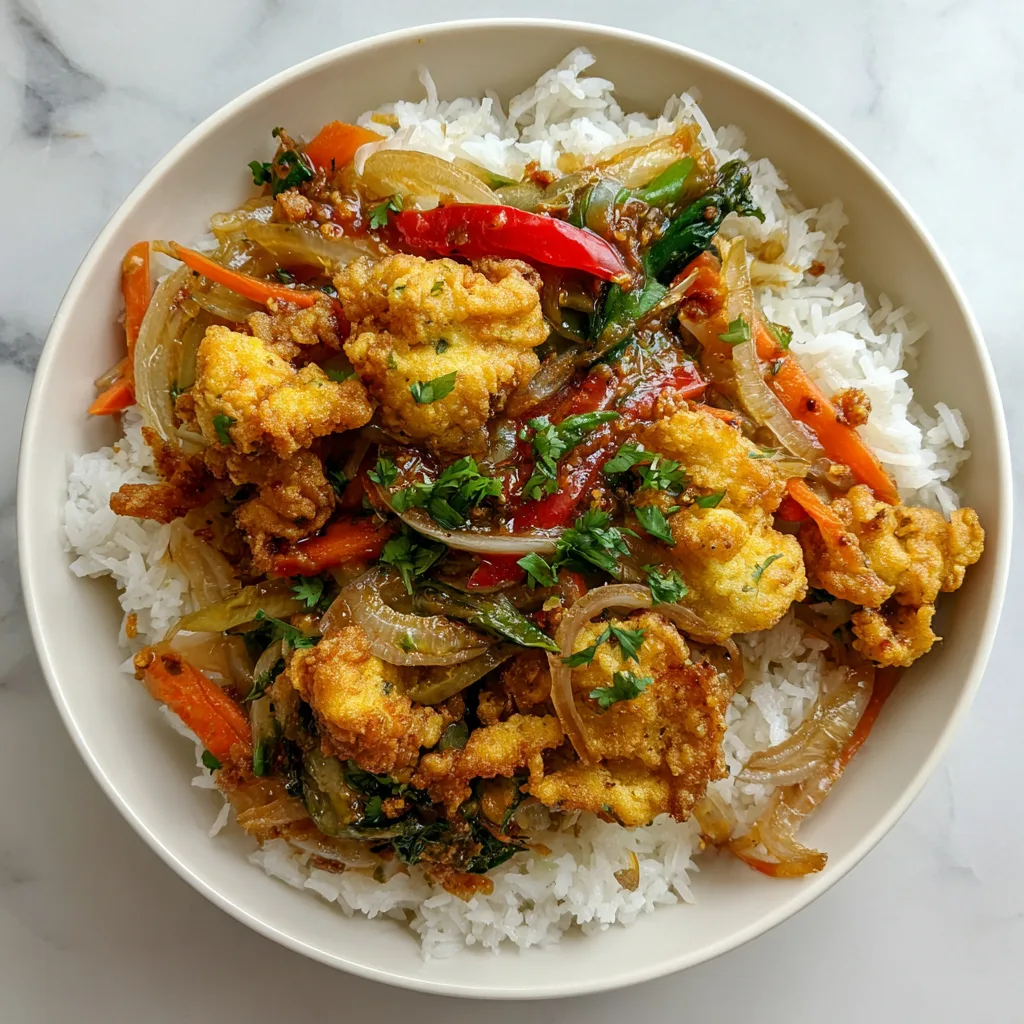
This is my weeknight-friendly answer to the classic chicken pakora recipe when you want crunch and a full plate, not just a snack on a napkin. You fry spiced, gram-flour-coated chicken bites until they get those craggy pakora edges, then you do the slightly rebellious thing: toss them into a fast stir-fry with glossy sauce, loads of vegetables, and a bowl of hot rice underneath. The trick is simple: keep the pakora crisp by frying hard, stir-fry fast, and only sauce the chicken right before serving so you get that perfect half-crunch/half-saucy bite that makes you go back for just one more (and then three more).
Chicken Pakora Stir-Fry with Vegetables and Rice (Crispy Meets Saucy)
Crispy chicken pakora bites tossed in a quick vegetable stir-fry sauce and served over fluffy basmati rice.
Prep Time 20 minutes mins
Cook Time 30 minutes mins
Total Time 50 minutes mins
Course Main Dish
Cuisine Pakistani
Medium Saucepan with Lid 2 to 3 quart is ideal for rice; substitute with a small dutch oven or any pot with a tight lid
Wok or large skillet 12 inch works best for quick stir-fry heat; substitute with a cast iron skillet or a wide stainless saute pan
deep, heavy pot for frying a 5 to 6 quart dutch oven helps prevent oil temperature swings; substitute with a deep skillet but keep the oil depth at least 1 1/2 inch
Instant-read thermometer helps you hold oil at 350°F and cook chicken safely; substitute by testing with a small batter drop (it should sizzle immediately and float)
Wire rack and sheet pan best for keeping pakora crisp after frying; substitute with paper towel but expect slightly softer crust
Mixing bowls one for marinating chicken and one for batter; any size works as long as you can toss comfortably
spider strainer or slotted spoon for fast, safe removal of fried pieces; substitute with tongs (work carefully) or a slotted spoon
For the rice
- 1 1/2 cup basmati rice rinsed until the water runs mostly clear; substitute with jasmine rice but reduce water slightly
- 2 1/4 cup water for basmati; adjust if your brand cooks differently
- 1 teaspoon kosher salt or use 1/2 teaspoon fine salt
- 1 teaspoon ghee optional, for fragrance; substitute with butter or a neutral oil
For the chicken pakora
- 1 1/4 pound boneless skinless chicken thigh cut into 1 inch pieces; substitute with boneless skinless chicken breast but do not overcook
- 2 tablespoon plain yogurt helps tenderize and carry spice; substitute with buttermilk
- 1 tablespoon lemon juice fresh is best; substitute with lime juice
- 2 teaspoon garlic finely grated; about 2 clove
- 2 teaspoon ginger finely grated; about a 1 inch knob
- 1 1/2 teaspoon kashmiri chili powder for color and mild heat; substitute with sweet paprika plus a pinch of cayenne
- 1/2 teaspoon cayenne pepper optional, for a more spicy chicken pakoda recipe vibe
- 1 teaspoon ground coriander bright, citrusy backbone
- 1 teaspoon ground cumin earthy and warm
- 3/4 teaspoon kosher salt season the chicken now so the inside tastes like something
- 1 cup besan gram flour (chickpea flour); substitute with 3/4 cup besan plus 1/4 cup rice flour for extra crispness
- 3 tablespoon rice flour optional but recommended for crunch; substitute with cornstarch
- 1/2 teaspoon baking powder tiny lift for craggier edges
- 1/2 teaspoon garam masala stir in at the end of batter mixing for aroma
- 1/2 cup cold water add as needed to make a thick, clingy batter; soda water makes it even lighter
- 3 cup neutral frying oil canola, peanut, or sunflower; you need enough for 1 1/2 to 2 inch depth
For the vegetable stir-fry
- 2 tablespoon neutral oil separate from frying oil; use avocado, canola, or sunflower
- 1 yellow onion thinly sliced; substitute with red onion
- 1 red bell pepper thinly sliced; any color works
- 2 cup green beans trimmed; substitute with snap peas
- 1 cup carrot matchsticks or thin half-moons so it cooks fast
- 2 cup baby spinach optional, wilts in seconds; substitute with shredded cabbage
- 2 teaspoon garlic minced; about 2 clove
- 1 teaspoon ginger minced
For the stir-fry sauce and finishing
- 3 tablespoon soy sauce use low-sodium if you prefer; substitute with tamari
- 1 1/2 tablespoon ketchup sounds odd but it brings gloss and sweet-tang; substitute with tomato sauce plus 1 teaspoon sugar
- 1 1/2 tablespoon rice vinegar or use distilled white vinegar
- 1 tablespoon honey or use brown sugar
- 1 teaspoon toasted sesame oil optional but great; add at the end for aroma
- 1 teaspoon ground black pepper for bite
- 1/2 teaspoon red pepper flakes optional, for heat
- 2 teaspoon cornstarch for a lightly thick, clingy sauce
- 3 tablespoon water to dissolve cornstarch
- 1 lemon cut into wedges, for serving
- 2 tablespoon cilantro roughly chopped; substitute with sliced scallion
Prep and rice
Rinse the basmati rice in a bowl until the water is mostly clear, then drain well. Add rice, water, salt, and ghee to a medium saucepan. Bring to a boil over high heat, stir once, then cover and reduce heat to low. Cook for 12 minutes. Turn off heat and let it steam, covered, for 8 minutes. Fluff with a fork and keep covered so it stays hot.
While the rice cooks, slice all vegetables and keep them in a single bowl so you can stir-fry fast. Stir-fry cooking is not the time to hunt for your garlic.
Marinate and batter the chicken
In a mixing bowl, toss chicken thigh pieces with yogurt, lemon juice, grated garlic, grated ginger, kashmiri chili powder, cayenne (if using), ground coriander, ground cumin, and salt. Let it sit for 10 minutes while you heat the oil. This short marinade is enough to season the interior and keep the chicken juicy.
In a second bowl, whisk besan, rice flour, baking powder, and garam masala. Add cold water a little at a time and whisk until you get a thick batter that drops slowly from a spoon and clings to the chicken. If it looks like pancake batter, it is too thin; add 1 tablespoon besan at a time. If it looks like dry sand, add 1 tablespoon water at a time.
Add the marinated chicken to the batter and toss until every piece is well coated. Rest the bowl for 2 minutes so the flour hydrates, then stir once more. Hydrated batter fries up less chalky and more crisp.
Fry the chicken pakora
Set a wire rack over a sheet pan. Pour frying oil into a deep, heavy pot and heat to 350°F over medium-high heat. Keep your thermometer in the pot; oil temperature is the difference between crisp pakora and greasy disappointment.
Fry in 3 batches: drop battered chicken pieces in one at a time (a spider strainer helps). Do not crowd the pot, or the oil temperature will crash. Fry each batch for 6 minutes, stirring gently once or twice so pieces do not stick. They should be deep golden with craggy edges. If they brown too fast, reduce heat slightly; if they look pale and sluggish, raise heat to recover 350°F.
Transfer pakora to the wire rack and sprinkle with a tiny pinch of salt while hot. Hold them uncovered while you finish the rest so steam does not soften the crust.
Stir-fry vegetables and sauce the pakora
In a small bowl, whisk soy sauce, ketchup, rice vinegar, honey, black pepper, red pepper flakes (if using), cornstarch, and water until smooth. Keep this by the stove; the sauce thickens fast.
Heat a wok or large skillet over high heat until very hot. Add 2 tablespoons neutral oil. Add onion, bell pepper, green beans, and carrot. Stir-fry for 5 minutes, tossing often, until vegetables are glossy and crisp-tender (you want some bite left). Add minced garlic and minced ginger and stir-fry for 30 seconds, just until fragrant.
Give the sauce a final whisk, then pour it into the pan. Cook for 1 minute, stirring constantly, until it turns shiny and lightly thickened. Add spinach (if using) and toss for 30 seconds to wilt.
Turn heat to low. Add the fried chicken pakora and toss gently for 45 seconds, just to coat and warm through. Do not simmer for minutes or the pakora will go fully soft. The goal is sauced edges with a little crunch left in the ridges.
Serve
Spoon rice into bowls, top with the chicken pakora stir-fry, and finish with cilantro and a squeeze of lemon. If you like it louder, add a pinch of chat masala or extra chili flakes at the table.
If you are turning this into a party platter (it totally works as one of your chicken starter recipes), skip the rice and serve the sauced pakora alongside toothpicks, chutneys, and a big crunchy salad. For a more street snack feel, keep the pakora dry-crisp and offer the stir-fry sauce as a dip instead of tossing.
I prefer boneless skinless chicken thigh because it stays juicy through frying and the quick sauce-toss. Boneless skinless chicken breast also works, but cut it slightly larger (about 1 1/4 inch pieces) and fry just until done so it does not dry out.
You can shallow-fry in a heavy skillet with about 1/2 inch oil, turning pieces several times. You will lose a little of the all-over craggy crunch, but it still tastes great. Air-frying is possible, but the batter does not behave like breading; it tends to dry unevenly unless you add extra oil and work in very small batches.
Fry at a steady 350°F, drain on a wire rack (not paper towel), and keep the stir-fry fast. The key move is adding the pakora at the very end and tossing for under a minute. If you want maximum crunch, serve the sauce and vegetables over rice and pile the pakora on top without tossing.
You can slice vegetables and mix the sauce up to 24 hours ahead. For the chicken, you can marinate (without adding besan) for up to 8 hours. Batter and fry right before serving for the best texture. If you must reheat fried pakora, use a 425°F oven for 8 minutes on a rack to re-crisp, then toss briefly with sauce.
Use a neutral, high-smoke-point oil like canola, peanut, or sunflower. Keep the oil around 350°F. Chicken pieces this size are typically done after 6 minutes per batch, but the safest check is an internal temperature of 165°F on an instant-read thermometer.