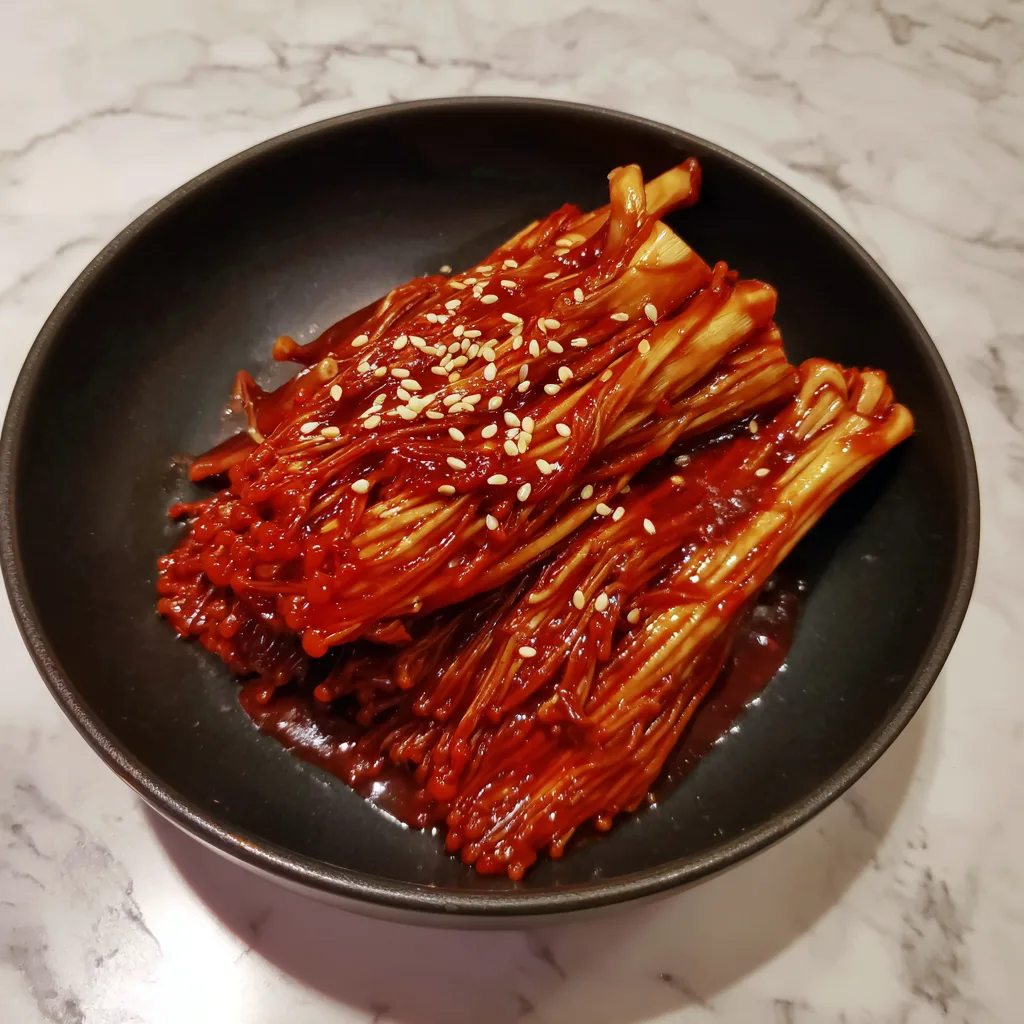
If you've ever stood in the produce aisle holding a pack of enoki and thought, "Now what?" this is the answer. This braised enoki mushroom recipe goes full Korean comfort-food mode: a quick simmer in soy sauce, gochujang, garlic, and a splash of something sweet turns those delicate mushroom bundles into a glossy, slurpable pile of umami. The texture is the whole point here: silky stems, lightly chewy tips, and a sauce that clings like it has secrets. I like serving it as a banchan-style side with rice, but honestly it's also a dangerously easy topping for noodles, tofu, eggs, or anything that needs a spicy-sweet wake-up call.
Braised Enoki Mushrooms in Korean Soy Sauce and Gochujang (Sweet-Savory, Glossy, and Addictive)
Tender enoki mushrooms braised in a Korean-inspired soy-gochujang sauce until glossy and deeply savory.
Prep Time 20 minutes mins
Cook Time 25 minutes mins
Total Time 45 minutes mins
Course Side Dish
Cuisine Korean
Large skillet with lid 12-inch is ideal so the enoki can lie fairly flat for even braising; nonstick makes the sticky gochujang glaze easier to manage, but stainless works if you keep the heat moderate and stir gently. A wide sauté pan or shallow Dutch oven is a good alternative.
Small Mixing Bowl for whisking the sauce so the gochujang dissolves before it hits the pan; a liquid measuring cup also works.
Whisk or Fork a whisk helps smooth out gochujang; if your paste is stiff, a fork plus a little patience is fine.
Tongs or a fish spatula enoki is delicate once cooked; tongs help you flip the bundles without shredding them. Two spoons work in a pinch.
microplane or fine grater (optional) for grating garlic and ginger into the sauce so it melts in and you don't get raw chunks; mincing with a knife is totally fine.
Cutting board and knife you'll trim the enoki root end and slice scallions; kitchen scissors are a handy alternative for scallions.
For the enoki
- 14 ounce enoki mushrooms trim off the woody root end; keep the clusters mostly intact so they braise into neat bundles (sub with beech mushrooms or oyster mushrooms; texture will be different but still delicious)
- 1 tablespoon neutral oil avocado, grapeseed, or canola; you just need enough to lightly coat the pan
For the Korean soy-gochujang braising sauce
- ¼ cup soy sauce regular soy sauce for a punchier, saltier result; use tamari for gluten-free
- 3 tablespoon water keeps the sauce from reducing too fast; use vegetable stock for a richer base
- 2 tablespoon gochujang Korean chili paste; heat level varies by brand, so start here and adjust later if you want it spicier
- 1 tablespoon mirin adds sweetness and shine; substitute with 2 teaspoon sugar plus 1 teaspoon rice vinegar if needed
- 1 tablespoon brown sugar light or dark; substitute with honey or maple syrup for a slightly different kind of caramel-y sweetness
- 2 teaspoon toasted sesame oil use it for flavor, not frying; add more at the end if you want it extra fragrant
- 2 teaspoon garlic finely grated or minced; fresh is best, but 1 teaspoon garlic paste works
- 1 teaspoon fresh ginger finely grated or minced; optional but highly recommended for brightness
- 1 teaspoon rice vinegar balances the sweetness and soy; substitute with apple cider vinegar in a pinch
- ½ teaspoon gochugaru optional for extra heat and a fruitier chili note; omit if you want it milder
To finish and serve
- 2 tablespoon toasted sesame seed for nutty crunch; black sesame seed is also great
- 2 scallion thinly sliced on a bias; sub with chives
- 1 teaspoon toasted sesame oil optional finishing drizzle if you love that aroma
Prep the mushrooms (keep them tidy)
Trim the enoki: place the mushrooms on a cutting board and slice off the compact, woody root end (usually about 1/2 inch). Try to keep the rest in chunky clusters rather than pulling everything into loose strands; intact bundles are easier to flip and look extra appetizing once glazed.
Clean gently: enoki is usually quite clean, but if you see grit, rinse quickly under cool water and shake off excess. Pat very dry with a clean towel. Wet mushrooms will steam instead of braise, and the sauce won't cling as nicely.
Mix the Korean soy-gochujang sauce
In a small bowl, whisk together soy sauce, water, gochujang, mirin, brown sugar, toasted sesame oil, garlic, ginger, rice vinegar, and gochugaru (if using). Whisk until the gochujang is fully dissolved and the sauce looks smooth and brick-red. This step matters: if you dump stiff gochujang straight into the pan, it can stick in clumps and reduce unevenly.
Taste a tiny dab from a spoon. You're looking for salty-sweet with a warm chili hum. If it tastes aggressively salty, add 1 more tablespoon water. If you want it sweeter (more "glaze" than "dip"), add 1 teaspoon brown sugar.
Braise and glaze the enoki
Heat a large skillet over medium heat and add the neutral oil. Swirl to coat the pan. Lay the enoki clusters in the skillet in a mostly even layer. If they overlap a bit, that's fine, but avoid a tall pile so everything cooks at the same pace.
Pour the sauce over the mushrooms. It will look like a lot of liquid at first, but enoki collapses quickly and the sauce reduces into a glossy coating.
Cover with a lid and simmer for 8 minutes. The lid helps the sauce penetrate the bundles and softens the mushrooms gently without scorching the gochujang.
Uncover, then use tongs to carefully flip and redistribute the enoki so both sides get time in the sauce. Keep the heat at medium; you want an active simmer, not a raging boil.
Continue cooking uncovered for 12 minutes, stirring and turning the bundles occasionally. As the liquid reduces, it will go from "soupy" to "syrupy". You'll know you're close when the bubbles get larger and slower, and the sauce starts to cling to the mushrooms instead of pooling.
Finish the glaze: lower heat to medium-low and cook for 5 minutes more, gently tossing so the mushrooms get evenly lacquered. The final sauce should be shiny and thick enough to coat the back of a spoon, but not so reduced that it turns candy-sticky. If it reduces too far, splash in 1 tablespoon water and loosen it.
Serve (and make it feel like a real banchan)
Turn off the heat. Sprinkle with toasted sesame seed and sliced scallion. If you want maximum aroma, add the optional 1 teaspoon toasted sesame oil right at the end.
Serve warm as a side dish with rice, or let it cool to room temperature for a more banchan-style vibe. Spoon any extra sauce from the pan over the mushrooms right before serving; it's basically the best part.
Look for fresh enoki with bright white stems and tight, clean-looking tips. Avoid packs with lots of sliminess or strong odor. To prep, slice off the compressed root end (the part that looks like a solid block) and keep the rest in bundles. Rinse only if needed and dry well so the sauce clings.
Yes. Beech mushrooms (shimeji) are the closest vibe: small, clustered, and pleasantly springy. Oyster mushrooms also work, but tear them into strips so they cook evenly. You may need a few extra minutes of uncovered simmering to reduce the sauce because thicker mushrooms release more moisture.
With 2 tablespoon gochujang, it's medium: warm and tingly, not mouth-on-fire. For milder, reduce gochujang to 1 tablespoon and skip gochugaru. For hotter, add 1/2 teaspoon more gochugaru or a pinch of cayenne. If it gets too spicy, don't just add more soy sauce (you'll make it salty); add a little sugar and a splash of water to mellow it.
Absolutely. Thin slices of pork belly sear quickly and pair beautifully with the spicy glaze. If you prefer chicken, use boneless, skinless chicken thigh cut into bite-size pieces; thigh stays juicy and holds up to braising better than breast. For beef, thin-sliced ribeye cooks fast, or use pre-cooked shredded brisket stirred in at the end to warm through.
Store in an airtight container in the refrigerator for 3 days. Enoki will soften more as it sits, but it stays tasty and saucy. Reheat gently in a skillet over medium-low with 1 tablespoon water to loosen the glaze, or microwave in short bursts and stir so the sauce heats evenly.