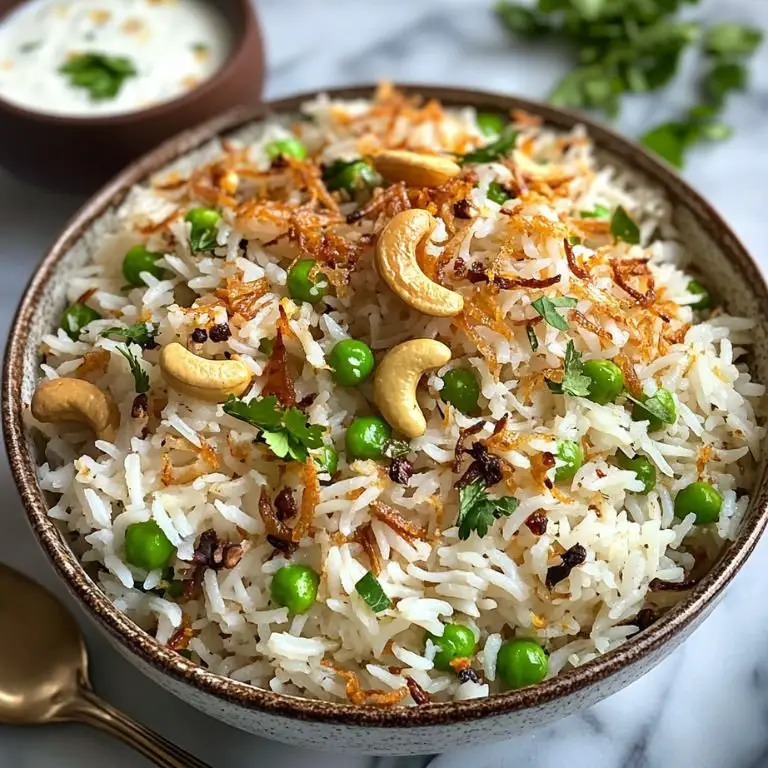
There’s something heartwarming about the aroma of hot ghee rice wafting through your kitchen—especially when it’s made with fragrant basmati rice, garden-fresh green peas, and the earthy aroma of curry leaves crackling in golden ghee. This dish is one of those comforting staples you’ll find in many South Indian homes, especially during festivals, family get-togethers, or even a lazy Sunday lunch. It’s both luxurious and simple—a balance many variety rice recipes from India masterfully strike. I grew up eating this dish, sometimes paired with a spicy egg curry or a simple cucumber raita. It’s a dish that easily impresses with minimal effort, making it perfect for both weekday cooking and festive occasions.
Whether you're looking to expand your repertoire of Indian rice recipes or just want a fuss-free meal that still delivers flavor, this ghee rice with green peas and curry leaves deserves a spot on your menu.
Aromatic Ghee Rice with Green Peas and Curry Leaves
Prep Time 10 minutes mins
Cook Time 20 minutes mins
Total Time 30 minutes mins
Course Main Course, Side Dish
Cuisine Indian
Heavy-bottomed pan or saucepan with a lid Helps cook rice evenly without burning.
Strainer or sieve For rinsing and soaking rice.
Wooden spatula Gentle on the grains while stirring.
Frying pan (optional) For toasting cashews or frying onions for garnish.
For the Rice
- 1 cup basmati rice – long-grain preferred for its aroma and non-sticky texture
- 2 tablespoons ghee – preferably homemade see how to make ghee at home below
- 1 small cinnamon stick
- 2-3 green cardamom pods
- 4-5 whole black peppercorns
- 2 cloves
- 1 bay leaf
- 1 teaspoon cumin seeds
- 8-10 fresh curry leaves
- 1 small onion thinly sliced
- 1 cup green peas – fresh or frozen
- 2 ¼ cups water
- Salt to taste
Optional Garnish
- Fried onions
- Cashews sautéed in ghee
- Fresh coriander leaves
Rinse and Soak the Rice
Rinse the basmati rice in cold water 2–3 times until the water runs clear. Then soak it in water for 15–20 minutes. This ensures fluffier rice and faster cooking.
Prepare the Spiced Ghee Base
In a heavy-bottomed pan, heat 2 tablespoons of ghee over medium flame. Once hot, add cinnamon, cardamom, peppercorns, cloves, bay leaf, and cumin seeds. Sauté until the spices begin to sizzle and release aroma.
Next, toss in the curry leaves. They’ll crackle almost immediately. Add sliced onions and sauté until they are golden and slightly caramelized—this adds a slight sweetness that balances the savory profile of the dish.
Add the Peas and Rice
Stir in the green peas and cook for 1–2 minutes. Drain the soaked rice and add it to the pan. Gently stir for 2 minutes so the rice gets coated in the spiced ghee and slightly toasted.
Cook the Rice
Add 2 ¼ cups of water and salt to taste. Bring to a boil, then reduce to a simmer. Cover with a tight-fitting lid and cook on low heat for about 12–15 minutes or until the rice is cooked and water is fully absorbed.
Rest and Fluff
Turn off the heat and let the rice rest for 5 minutes with the lid on. Then fluff gently with a fork to separate the grains.
Garnish and Serve
Top with fried onions, ghee-toasted cashews, or freshly chopped coriander if you like. Serve hot!
Pairings in Detail
This dish is a fantastic canvas for bold and vibrant curries. Here are some great pairings:
- Spicy egg curry or chettinad chicken curry – Their robust spice complements the gentle richness of the ghee rice.
- Japanese curry – Yes, a fusion idea! The subtly sweet and thick Japanese curry plays surprisingly well with the spiced ghee base.
- Tadka dal or sambar – For a comforting vegetarian Indian meal. The mild ghee rice cuts through the spicy tang of lentils perfectly.
- Cucumber raita or boondi raita – Offers cooling contrast.
- Roasted vegetables or even a warm salad – Great for a light, healthful plate.
If you’re in the mood for a pan-Asian dinner, try wrapping leftovers into rice paper rolls with spicy dipping sauce. It’s an innovative take from the world of rice paper recipes.
FAQs
1. What type of rice works best?
Basmati is traditional and ideal due to its fragrance and long, non-sticky grains. However, you can try jasmine rice or short-grain rice for a different texture, though it may slightly alter the flavor.
2. Can I use brown rice?
Yes, but you'll need to increase the cooking time and water. Soak it longer and expect a nuttier taste and chewier texture.
3. What kind of ghee is best?
Fresh homemade ghee is unbeatable. If you're unsure how to make ghee at home, simply simmer unsalted butter on low heat until the milk solids separate and the liquid turns golden and aromatic. Strain and store in a jar—it keeps well for weeks. There are plenty of tutorials, including a ghee recipe video or blog post, that can guide you through making ghee from scratch.
4. Can I add protein?
Definitely. For a vegetarian twist, consider adding lightly sautéed tofu or paneer. For a non-vegetarian boost, shredded chicken or boiled eggs work great. You could even stir in cooked lentils for a dal rice-style hybrid.
5. Is this dish similar to bagara rice?
Yes, it shares a lot with bagara rice recipe techniques, especially the tempering of whole spices in ghee. But while bagara often includes tomatoes or ground masalas, this version keeps it lighter and simpler.
6. How does this compare to jollof rice or zarda rice?
Jollof rice is spicy and tomato-based, more savory and robust, while zarda rice recipe is sweet, made with sugar and saffron. Ghee rice sits comfortably in the middle: savory, aromatic, and delicate, perfect as a side or main.