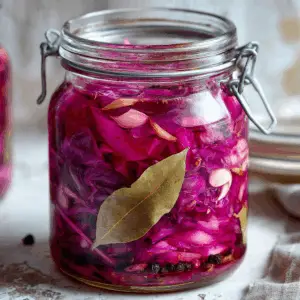
Russian Pickled Cabbage with Beets and Garlic
Equipment
- Large glass jar or ceramic crock (at least 2-liter capacity)
- Medium saucepan (for heating the brine)
- Large Mixing Bowl
- Cutting board and sharp knife
- Mandoline slicer (optional, but great for thin beet slices)
- Measuring cups and spoons
- Clean kitchen towel or fermentation lid
Ingredients
For the Pickled Cabbage
- 1 medium head of green cabbage cored and chopped into large chunks (not shredded)
- 2 medium beets peeled and thinly sliced
- 5 –6 large garlic cloves sliced
- 1 tablespoon black peppercorns
- 2 –3 bay leaves
- 1 tablespoon salt non-iodized, preferably pickling or sea salt
- 2 tablespoons sugar adjust to taste for a slightly sweet pickling profile
For the Pickling Liquid
- 4 cups water
- 1 cup distilled white vinegar 5% acidity
Optional: a small piece of horseradish root (to hint at a horseradish pickles recipe)
Optional: a pinch of red pepper flakes for heat
Instructions
Step 1: Prepare the Vegetables
- Start by removing any damaged outer leaves from the cabbage. Cut the cabbage into large, bite-sized chunks—don’t shred it, as the texture of whole pieces holds up better for pickling.
- Peel the beets and slice them thinly, ideally with a mandoline for uniform thickness. The thinner the slices, the more easily they’ll release their pigment and flavor into the pickling liquid. Slice the garlic into thin slivers as well.
- In a large mixing bowl, toss the cabbage, beets, and garlic together gently, then transfer the mixture into your clean jar or crock, layering in the peppercorns and bay leaves as you go.
Step 2: Make the Pickling Liquid
- In a medium saucepan, combine the water, vinegar, salt, and sugar. If you're going for a variation reminiscent of a cinnamon pickles recipe, you can drop in a small cinnamon stick at this stage (totally optional, but adds warmth). Heat until the salt and sugar are fully dissolved, then remove from heat.
- Let the liquid cool slightly—about 5–10 minutes—so it doesn’t cook the vegetables. Pour the warm brine over the cabbage and beet mixture until everything is submerged.
Step 3: Weigh It Down
- If you're fermenting, weigh the veggies down with a fermentation weight or a clean rock-safe plate that fits inside your jar. Cover with a cloth or use a fermentation lid to allow gases to escape.
- If you're doing a quick pickle, seal the jar with a lid once the mixture cools completely.
Step 4: Let It Pickle
- Leave the jar at room temperature for 3–5 days, depending on how tangy and intense you want the flavor. Taste it after day 3. Once it’s ready, transfer to the fridge. For a more classic homemade refrigerator pickles approach, you can refrigerate immediately and let it cure slowly over a week.
- The final product should have a vibrant magenta color, a sharp and savory flavor, and a bit of crunch left in the cabbage.