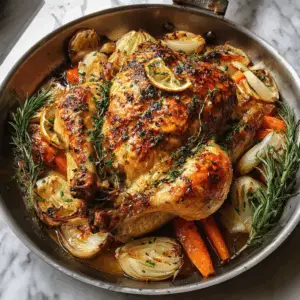
Herb Butter Roast Chicken with Lemon and Rosemary
Equipment
- Sharp kitchen shears or a chef’s knife For spatchcocking the chicken (removing the backbone). If you're unsure, many butchers will do it for you on request.
- Roasting pan or large cast iron skillet A shallow roasting pan allows the skin to crisp up. A dutch oven is a great alternative if you prefer more contained cooking and juicier results (also great if you're browsing dutch oven recipes).
- Meat Thermometer For perfectly cooked chicken, aim for an internal temp of 165°F (75°C) in the thickest part of the breast.
- Mixing bowl and spatula To combine the herb butter.
- Basting brush or clean hands To spread the butter mixture under and over the skin.
Ingredients
For the Herb Butter
- ½ cup 1 stick unsalted butter, softened
- 3 garlic cloves minced
- 1 tablespoon finely chopped fresh rosemary
- 1 tablespoon finely chopped fresh thyme
- 1 tablespoon finely chopped fresh parsley
- Zest of 1 lemon
- 1 tablespoon lemon juice
- 1 teaspoon kosher salt
- ½ teaspoon black pepper
For the Chicken
- 1 whole chicken about 4-4.5 lbs, spatchcocked (backbone removed)
- 1 lemon sliced into thin rounds
- 4 sprigs fresh rosemary
- 1 large yellow onion cut into thick slices
- 3 carrots peeled and cut into large chunks
- 2 celery stalks chopped
- 1 head garlic halved horizontally
- 2 tablespoons olive oil
- Salt and pepper to taste
Instructions
Preheat and Prepare
- Start by preheating your oven to 425°F (220°C). While it heats up, prep your chicken. If it isn’t already, spatchcock the chicken by removing the backbone with kitchen shears, then flatten it by pressing down on the breastbone until it cracks.
- Spatchcocking ensures even cooking and crispier skin, making it a favorite method for many spatchcock chicken oven recipes.
Make the Herb Butter
- In a mixing bowl, combine the softened butter, garlic, rosemary, thyme, parsley, lemon zest, lemon juice, salt, and pepper. Mix until fully incorporated.
Season the Chicken
- Gently loosen the skin over the chicken breast and thighs using your fingers, being careful not to tear it. Spread about ⅔ of the herb butter under the skin, then rub the rest over the entire outer surface of the chicken.
- Place the lemon slices under the skin where possible or lay them over the top if that’s easier. This helps the citrus infuse directly into the meat.
Layer the Aromatics
- In your roasting pan or dutch oven, arrange the onion slices, carrots, celery, and halved garlic. These not only add flavor but also act as a natural roasting rack, lifting the chicken so hot air can circulate underneath. Lay a few sprigs of rosemary on the veggies.
Roast
- Place the buttered and seasoned chicken on top of the aromatics, skin side up. Drizzle with olive oil and give a final sprinkle of salt and pepper.
- Roast for 50–60 minutes or until the internal temperature reaches 165°F in the thickest part of the breast and juices run clear. If using a dutch oven, keep the lid off to allow the skin to crisp.
Rest and Serve
- Once done, let the chicken rest for at least 10 minutes before carving. This allows the juices to redistribute, ensuring every slice is juicy and tender.
- Carve and serve alongside the roasted veggies or your favorite side dishes for a stunning chicken roast dinner.