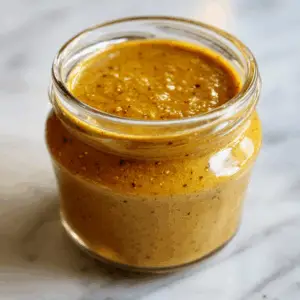
Fermented Russian Mustard with Raw Garlic Clove
Equipment
- Glass jar with lid A small mason jar (8 oz) is ideal. Avoid metal, as mustard is acidic.
- Non-metallic mixing bowl Mustard can react with metal, so go for ceramic, glass, or high-quality plastic.
- Wooden spoon or silicone spatula For stirring the mixture.
- Cheesecloth or fermentation lid To cover the jar during fermentation while allowing gas to escape.
- Garlic Press or Microplane Makes quick work of getting the garlic finely minced.
- Measuring spoons and cups
Ingredients
Dry mustard powder
- 1/2 cup This is the backbone of the mustard. Use a strong, fresh batch—Colman's is a good choice if you want something with bite.
Filtered water
- 1/3 cup Avoid tap water with chlorine as it can interfere with fermentation.
Raw apple cider vinegar
- 2 tablespoons Adds acidity and helps preserve the final product.
Raw garlic
- 3 cloves finely minced or grated
Salt
- 1 teaspoon Non-iodized, like sea salt or kosher salt, is best.
Honey
- 1 teaspoon Optional, but balances the flavor without killing the heat.
Sugar
- 1/2 teaspoon Just a touch to help with fermentation.
Ground turmeric
- 1/4 teaspoon For color and a hint of earthy flavor.
Ground allspice or coriander
- 1/4 teaspoon Optional, adds a warm undertone.
Starter culture (Optional, but useful)
- A teaspoon of sauerkraut brine or whey can help kickstart fermentation.
Instructions
Create the Mustard Paste
- In a non-metallic bowl, whisk together the mustard powder, filtered water, vinegar, salt, sugar, and turmeric until smooth. The mixture will be thick and slightly grainy—that’s exactly what you want.
Add Garlic and Optional Flavorings
- Stir in the finely grated or minced raw garlic. At this stage, you can also add the honey if you want a milder finish, or keep it traditional and fiery. For extra depth, toss in a pinch of allspice or coriander.
Kickstart Fermentation (Optional)
- If you have whey or raw sauerkraut brine, stir in a teaspoon. It’s not necessary but can help jumpstart the natural fermentation process.
Transfer to a Jar
- Spoon the mustard paste into your clean jar. Press down to remove air pockets and leave about an inch of headspace. Cover the jar with cheesecloth secured with a rubber band, or use a proper fermentation lid.
Ferment at Room Temperature
- Let the jar sit at room temperature (65–75°F) for about 3 days. Stir once a day with a clean spoon. Taste after the second day—fermentation mellows the initial bitterness and sharpens the heat. Once it reaches your preferred tang and fire level, it’s time to refrigerate.
Refrigerate and Rest
- Seal the jar with a lid and refrigerate. The flavors will continue to deepen over the next few days. For best taste, wait at least 2 more days before using.