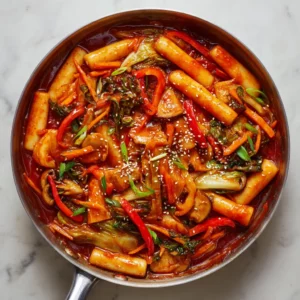
Easy Vegetarian Tteokbokki with Rice Cakes and Veggies
A tteokbokki recipe vegetarian-style with chewy rice cakes, a quick gochujang sauce, and crisp veggies, ready fast in one pan.
Equipment
- large nonstick skillet or wide shallow pot use a 12-inch skillet or a wide pot (wider is better than tall so the sauce reduces quickly); stainless steel works too, but stir more often to prevent sticking
- Small bowl and whisk for mixing the sauce so the gochujang dissolves smoothly; a fork works in a pinch
- cutting board and chef knife a sharp knife matters here because the veggies cook fast and you want clean, even pieces; pre-cut stir-fry vegetables are a fine shortcut
- measuring cups and measuring spoons tteokbokki sauce is forgiving, but accurate measuring helps you land the sweet-salty balance on the first try
- Silicone spatula or wooden spoon use something sturdy for stirring; rice cakes are bouncy and will fight flimsy tools
Ingredients
For the rice cakes
- 1 pound korean rice cakes (tteok) cylindrical tteokbokki tteok is classic; use fresh or refrigerated if possible; if using frozen, thaw in the fridge overnight for best texture
- 6 cup warm water for soaking if your rice cakes are firm or refrigerated; you may not need it for very fresh, soft rice cakes
For the easy gochujang sauce
- 2 cup vegetable broth or use water plus 1 teaspoon vegetable bouillon; broth adds more depth to vegetarian tteokbokki
- 3 tablespoon gochujang korean red chile paste; for a milder, closer-to-non-spicy tteokbokki vibe, start with 2 tablespoon and add more at the end if you want
- 1 tablespoon soy sauce use tamari if gluten-free (check your gochujang too)
- 1 tablespoon brown sugar light or dark; swap with 1 tablespoon honey if not vegan
- 1 tablespoon toasted sesame oil this goes in at the end for aroma; do not cook it hard or it can taste bitter
- 3 clove garlic finely grated or minced; jarred garlic works, but fresh tastes brighter
- 1 teaspoon gochugaru optional, for extra heat and color; skip if you want mild
- 1 teaspoon rice vinegar optional, but a tiny splash wakes up the sauce if it tastes flat
For the veggies
- 1 tablespoon neutral oil avocado oil, grapeseed oil, or canola oil; avoid olive oil if you want a cleaner, less fruity flavor
- 1 yellow onion thinly sliced so it softens fast and sweetens the sauce
- 2 carrot cut into matchsticks or thin half-moons; thick slices stay crunchy (which is not bad, but different)
- 1 red bell pepper thinly sliced; any color works, but red is sweetest
- 2 cup napa cabbage roughly chopped; substitute with bok choy or shredded green cabbage
- 6 shiitake mushroom sliced; swap with oyster mushroom, cremini, or whatever you have
- 3 scallion thinly sliced, white and green parts separated for better layering
To finish (highly recommended)
- 1 teaspoon toasted sesame seed for crunch and that unmistakable street-food aroma
- 1 sheet gim (roasted seaweed) optional, torn over the top; substitute with nori snack sheets
- 4 ounce mozzarella optional for a cheesy finish; use low-moisture mozzarella; for vegan, try a meltable dairy-free mozzarella-style shred
Instructions
Prep
- Soak the rice cakes: If your tteok feel firm (common with refrigerated or vacuum-packed), put them in a bowl and cover with warm water for 10 minutes while you prep everything else. Drain well. If your rice cakes are very fresh and soft, you can skip soaking, but still give them a quick rinse so they do not carry extra starch into the pan.
- Slice and stage the vegetables: Thinly slice the onion and bell pepper, cut the carrot into matchsticks, chop the napa cabbage, and slice the mushrooms. Keep the scallion whites separate from the greens so you can cook the whites early and use the greens as a fresh finish.
How to make tteokbokki sauce (the fast way)
- In a small bowl, whisk together the vegetable broth, gochujang, soy sauce, brown sugar, garlic, and (if using) gochugaru and rice vinegar. Whisk until the gochujang is mostly dissolved. A few tiny specks are fine; they will melt into the sauce as it simmers.
- Taste the sauce now. It should be slightly too strong and a little sweet-salty because it will mellow once the rice cakes and vegetables go in. If you want a milder, closer-to-non-spicy tteokbokki, reduce gochujang by 1 tablespoon and add 1 extra teaspoon brown sugar.
Cook the veggies, simmer the rice cakes
- Heat a large skillet over medium-high heat and add the neutral oil. Add the onion and the white parts of the scallion, then cook for 2 minutes, stirring often, until the onion starts to soften and smell sweet.
- Add the carrot and mushrooms and cook for 3 minutes. You are not trying to fully brown everything; you just want the mushrooms to give up a little water and the carrot edges to soften so they finish nicely in the sauce.
- Pour in the sauce mixture and bring it to a steady simmer. Once it is bubbling, add the drained rice cakes and stir gently so they are coated and not clumped.
- Simmer for 12 minutes, stirring every minute or so, until the rice cakes are chewy-tender and the sauce looks glossy and slightly thickened. Keep the heat at a lively simmer; too low and the sauce will not reduce, too high and it can stick before the rice cakes soften. If the pan looks dry before the rice cakes are tender, add 1/4 cup water and keep simmering.
- Add the napa cabbage and bell pepper and cook for 4 minutes, stirring gently. The cabbage should wilt but still keep a little bite, and the pepper should stay bright. This is the moment that makes it taste like a vegetable-forward dinner instead of a snack that happens to contain vegetables.
Finish and serve
- Turn off the heat and stir in the toasted sesame oil. This keeps the flavor nutty and aromatic instead of cooked-off and flat.
- Optional cheesy finish: Sprinkle the mozzarella over the top, cover the pan for 2 minutes, then uncover and stir just once or twice for stretchy pockets. Keep it subtle; you want creamy ribbons, not a solid cheese brick.
- Taste and adjust: If it needs more salt, add 1 teaspoon soy sauce. If it needs more heat, add 1 teaspoon gochugaru. If it tastes too intense, add a splash of water and simmer for 1 minute to re-balance.
- Serve hot with scallion greens, toasted sesame seed, and (if using) torn gim over the top. Tteokbokki thickens as it sits, so if you are serving later, loosen with a splash of hot water and stir over low heat for 1 minute.