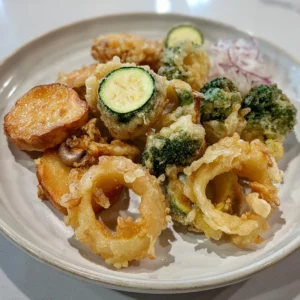
Crispy Vegetable Tempura with Light and Fluffy Batter (the tempura batter recipe you will actually want to keep)
Light, crisp vegetable tempura with a cold, barely-mixed batter and a quick dipping sauce for restaurant-style crunch at home.
Equipment
- large heavy pot or dutch oven 5 to 7 quart is ideal for steady oil temperature; a deep cast iron skillet works if you keep oil depth at about 1 1/2 inch and fry in smaller batches
- deep-fry thermometer clipped-on analog or digital probe; if you do not have one, use a wooden chopstick test (bubbles should gently but actively form around the wood)
- wire rack set over a rimmed baking sheet this keeps tempura crisp; paper towel alone can trap steam and soften the crust
- mixing bowl (medium) and small bowl chill the medium bowl in the freezer for 10 minutes if your kitchen runs warm; cold gear helps with an easy tempura batter
- chopsticks or fork traditional tempura is mixed with chopsticks to avoid overworking; a fork is fine, just stir minimally
- spider strainer or slotted spoon a spider makes it easier to lift fragile pieces without breaking the coating; tongs can squeeze and knock off crust
- Small saucepan for warming the dipping sauce; a microwave-safe bowl works if you heat in short bursts
- Cutting board and sharp knife uniform cuts cook evenly; a mandoline is great for sweet potato slices, but use a guard
Ingredients
for the vegetables (choose a mix)
- 1 sweet potato peeled, sliced into 1/8-inch rounds or half-moons (kabocha squash also works)
- 8 ounce cremini mushroom halved if large (oyster mushrooms are also fantastic for lacy edges)
- 2 cup broccoli floret cut into bite-size pieces, with some stem for structure
- 1 zucchini cut into 1/4-inch coins or long planks
- 1/2 yellow onion sliced into 1/2-inch rings, separated (great for extra crunch)
- 6 shishito pepper optional, leave whole and poke once with a knife to prevent splatter
for the quick tempura dipping sauce
- 3/4 cup dashi homemade or instant; substitute low-sodium chicken stock in a pinch
- 1/4 cup soy sauce use low-sodium if you prefer
- 3 tablespoon mirin or use 2 tablespoons rice vinegar plus 1 teaspoon sugar
- 1 teaspoon granulated sugar optional, to round out the sauce
- 1/3 cup daikon radish grated, lightly squeezed (optional but very classic)
- 1 teaspoon ginger grated, optional for zip
for the tempura batter (keep it cold)
- 1 cup all-purpose flour spooned and leveled; swap 2 tablespoons with rice flour for extra crispness if you like
- 2 tablespoon cornstarch helps the coating fry up light and crisp
- 1 teaspoon baking powder for a puffier, airier crust
- 1/2 teaspoon fine sea salt keep it subtle since you are dipping
- 1 egg cold from the fridge; you can omit for a lighter, more delicate crust
- 3/4 cup ice water this cold water tempura batter is the key; add 1 or 2 ice cubes to keep it chilled (do not pour ice cubes into the batter)
- 1 tablespoon vodka optional, helps reduce gluten and speeds evaporation for extra crunch; replace with more ice water
for frying and finishing
- 4 cup neutral oil canola, peanut, or rice bran; you need enough depth for easy flipping
- 2 tablespoon all-purpose flour for a light dusting on damp vegetables so the batter clings
- 1 pinch flaky salt optional, sprinkle right after frying for maximum impact
Instructions
prep (set yourself up for crisp success)
- Set a wire rack over a rimmed baking sheet and place it next to the stove. This is your landing zone, and it keeps the crust crisp instead of steaming.
- Wash and cut the vegetables into shapes that cook quickly: sweet potato 1/8-inch thick, mushrooms halved, broccoli in small florets, zucchini 1/4-inch thick, onion rings separated. Pat everything very dry with a clean towel. Surface water causes splatter and can make the batter slide off.
- Lightly dust the vegetables with 2 tablespoons flour. You are not trying to cake them, just give the batter something to grip. Shake off any excess.
make the dipping sauce
- In a small saucepan, combine dashi, soy sauce, mirin, and sugar. Bring to a gentle simmer over medium heat, then turn off the heat. Taste and adjust: more soy sauce for salt, a touch more sugar for roundness.
- Let the sauce cool to warm (hot sauce can soften tempura faster at the table). Stir in grated daikon and ginger right before serving so they taste fresh.
heat the oil
- Pour oil into a heavy pot and heat to 350 F over medium-high heat. Use a thermometer if you have one. If you do not, dip the tip of a wooden chopstick into the oil; steady bubbles should rise around it without aggressive smoking.
- Once you hit 350 F, nudge the heat down slightly to maintain temperature. Tempura is all about consistent heat: too cool and it gets greasy, too hot and the batter browns before the vegetables cook.
mix the homemade tempura batter (do this last)
- In a medium bowl, whisk together flour, cornstarch, baking powder, and salt. If you can, chill the bowl for a few minutes beforehand. Cold tools help you keep a crisp, light coating.
- In a small bowl, beat the cold egg with the ice water and vodka (if using). Pour the liquids into the dry ingredients.
- Mix with chopsticks or a fork for about 10 seconds, just until you see no large pockets of dry flour. The batter should look lumpy and a little uneven. That is not a mistake; it is how you avoid gluten development and keep this easy tempura batter delicate.
- If the batter thickens while you fry, add 1 tablespoon ice water and give it one or two quick stirs. Do not keep mixing. This is how to make tempura batter that stays airy: cold, quick, and barely combined.
fry the vegetable tempura
- Working in small batches, dip a few pieces of vegetable into the batter, let excess drip for a second, then carefully lay them into the oil. Do not drop them from high up; it can splash and it can knock batter off.
- Fry until pale golden and crisp, about 2 to 3 minutes for zucchini, mushrooms, and onion, and about 3 to 4 minutes for sweet potato depending on thickness. Keep an eye on color: tempura is often lighter than other fried foods.
- Use a spider to lift pieces out, let oil drain for a moment over the pot, then transfer to the wire rack. Sprinkle with a pinch of flaky salt while the coating is still hot, if you want.
- Between batches, skim floating batter bits (they burn and make the oil taste bitter). Bring the oil back to 350 F before adding the next batch so everything stays crisp instead of oily.
serve (the timing matters)
- Serve immediately with the warm dipping sauce. Tempura is at its absolute best in the first 10 minutes, when the crust is shattering and the vegetables are still steamy inside.
- If you want to set out a bigger spread, keep fried pieces on the wire rack in a 200 F oven while you finish frying, but do not cover them.