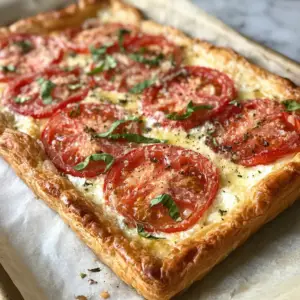
Campari Tomato and Basil Puff Pastry Tart
Equipment
- Baking sheet A heavy, rimmed baking sheet ensures even heat distribution. If you only have a thin pan, double it up to prevent scorching.
- Parchment paper Prevents sticking and helps with easy cleanup.
- Sharp knife or mandoline For slicing tomatoes evenly. A mandoline gives uniform slices but isn’t required.
- Mixing bowl Used for the ricotta mixture.
- Pastry Brush Helpful for brushing olive oil and sealing the pastry edges. If you don’t have one, the back of a spoon works fine.
- Cooling rack (optional) Allows the tart to cool slightly without steaming the bottom crust.
Ingredients
For the Tart Base
- Puff pastry 1 sheet, thawed
- Store-bought puff pastry works beautifully and keeps this tart accessible. Look for an all-butter version if possible for the best flavor and flake.
- Olive oil 2 tablespoons
- Use a good-quality extra virgin olive oil. It helps protect the pastry from moisture and adds richness.
For the Tomato Layer
- Campari tomatoes 4–5 medium
- Campari tomatoes are ideal because they’re sweet low in water, and intensely tomato-flavored. If unavailable, roma tomatoes recipes often work as a substitute due to their lower moisture content.
- Salt 1 teaspoon, divided
- Essential for drawing out moisture and intensifying tomato flavor.
- Freshly ground black pepper ½ teaspoon
For the Savory Spread
- Ricotta cheese ¾ cup
- Adds creaminess without overwhelming the tomatoes.
- Grated Parmesan cheese ½ cup
- Brings savory depth and helps anchor the tart.
- Garlic 2 cloves, finely grated
- Lemon zest ½ teaspoon
- Brightens the entire dish.
For Finishing
- Fresh basil leaves ½ cup, loosely packed
- Torn by hand for the best aroma.
- Red pepper flakes optional, ¼ teaspoon
- Just enough heat to balance the sweetness of the tomatoes.
- Balsamic glaze or reduction optional, for drizzling
Instructions
Prepare the Tomatoes
- Slice the Campari tomatoes into ¼-inch thick rounds and arrange them in a single layer on a paper towel-lined tray. Sprinkle lightly with half the salt and let them rest for 15 minutes. This step draws out excess moisture, which is crucial for keeping the puff pastry crisp. This technique is also common in tomato confit recipes and other fresh tomatoes recipes where texture matters.
Preheat and Prep
- Preheat your oven to 400°F (205°C). Line a baking sheet with parchment paper and set aside.
Prepare the Puff Pastry
- Unroll the thawed puff pastry onto the parchment-lined baking sheet. Using a sharp knife, lightly score a 1-inch border around the edges without cutting all the way through. This creates a raised crust once baked.
- Brush the center lightly with olive oil, avoiding the border. This thin barrier helps prevent sogginess.
Mix the Ricotta Layer
- In a mixing bowl, combine ricotta, Parmesan, garlic, lemon zest, black pepper, and the remaining salt. Stir until smooth and evenly mixed. Taste and adjust seasoning if needed.
- Spread the ricotta mixture evenly over the center of the puff pastry, staying within the scored border.
Layer the Tomatoes
- Pat the tomato slices dry with additional paper towels. Arrange them over the ricotta in overlapping rows, similar to shingles. Don’t worry about perfection—rustic looks are part of the charm in many summer tomato recipes.
- Drizzle lightly with olive oil and sprinkle with red pepper flakes if using.
Bake
- Transfer the tart to the oven and bake for 30–35 minutes, until the pastry is deeply golden and puffed, and the tomatoes are lightly caramelized around the edges.
Finish and Rest
- Remove the tart from the oven and let it rest for 10 minutes. This allows the layers to set and makes slicing easier.
- Scatter fresh basil over the top and drizzle with balsamic glaze if desired. Slice and serve warm or at room temperature.